When to Use Epoxy Primer in Car Repairs
October 12, 2026How to Prevent Fisheyes in Car Paint Repairs
October 12, 2026
What clearcoat does in a car paint system
Automotive clearcoat is the transparent top layer used over a compatible basecoat system. It provides gloss, helps protect the colour coat and contributes to the final appearance of the repair. Clearcoat cannot correct poor panel preparation, uneven basecoat coverage or contamination underneath, so every earlier stage still matters.
Choose a compatible clearcoat system
Select clearcoat only after checking the product technical data sheet and confirming it is compatible with the basecoat, hardener, reducer and application method being used. Do not mix components across systems unless the manufacturer explicitly permits it. The correct choice depends on the repair size, temperature, drying requirements and the finish expected.
- Use the recommended hardener and mix ratio.
- Match reducer speed to booth temperature and panel size when the data sheet calls for one.
- Check the stated pot life before mixing material.
- Confirm flash-off and bake or air-dry requirements.
How to choose a paint matting additive
First identify the layer you want to make less glossy. A pigmented topcoat and a transparent clearcoat have different compatibility requirements. Check the data sheet for the exact coating and additive before ordering.
- Compatible paints and clearcoats: HB Body 800 Matting Additive 1 L reduces gloss in compatible 1K or 2K paints and clearcoats. Confirm your coating and the finish you want in the HB Body product documentation.
- Compatible Mipa pigmented topcoats: Mipa Multi-Mat Matting Agent 1 L suits selected Mipa 1K and 2K topcoats. Mipa excludes clearcoats in its Multi-Mat technical sheet.
Check the coating maker’s recommended product and mixing instructions, then assess the dried finish on a test panel before refinishing the vehicle.
Prepare the basecoat before clearcoat
The basecoat should have even colour coverage and the correct flash time before clearcoat is applied. Spraying clearcoat too early can trap solvent; leaving it too long can create adhesion issues outside the specified recoat window. Keep the panel clean and avoid touching the surface after the final tack-rag process.
For earlier stages of the job, see our car panel preparation guide and automotive primer guide.
Set up the spray gun carefully
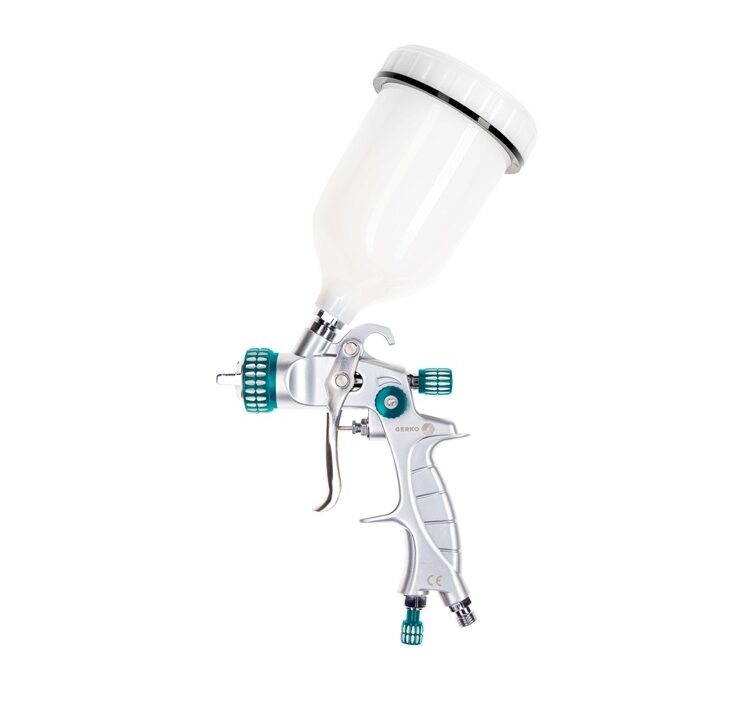
Use a clean, suitable spray gun and follow the nozzle, pressure and fan-pattern guidance for the product. Test the spray pattern before approaching the repair panel. A consistent fan, correct overlap and steady distance help produce an even wet film without dry spray, runs or excessive material build.
Apply controlled coats
Apply the number of coats stated in the data sheet, allowing the recommended flash time between each coat. Aim for even coverage rather than trying to create a heavy gloss coat in one pass. A coat that is too dry can reduce flow and gloss; one that is too wet may sag or trap solvent. Keep application conditions as clean and stable as practical.
Common clearcoat defects to prevent
Runs, orange peel, solvent pop, fisheyes and dust inclusions often originate in setup, contamination, timing or application technique. Degrease correctly, use clean air and equipment, observe flash times and do not rush curing. If defects occur, use the product instructions to decide whether sanding and polishing or a controlled repaint is appropriate.
Read our car paint defects guide for a practical breakdown of common causes and prevention steps.
Allow sufficient cure time
Follow the specified air-dry or baked cure schedule before handling, assembling, sanding or polishing the panel. Premature polishing can mark a soft finish, while overworking a fresh coating can reduce the result. Temperature and film thickness affect curing time, so rely on the technical data sheet rather than a generic timetable.
For measuring and application equipment, use our paint mixing cups and spray-gun cup systems buying guide to check capacity, pack contents, filters and adaptor fitment. The clearcoat technical data sheet remains the source for the exact mixing ratio and working time.
Build your repair system from compatible materials
Shadotech supplies automotive refinishing materials for preparation, priming and paintwork. Browse the U-POL product range, and use the product-specific instructions for every stage of the repair.